Ruth, in Her Own Words
The “Mamu” letters · 2003–2005
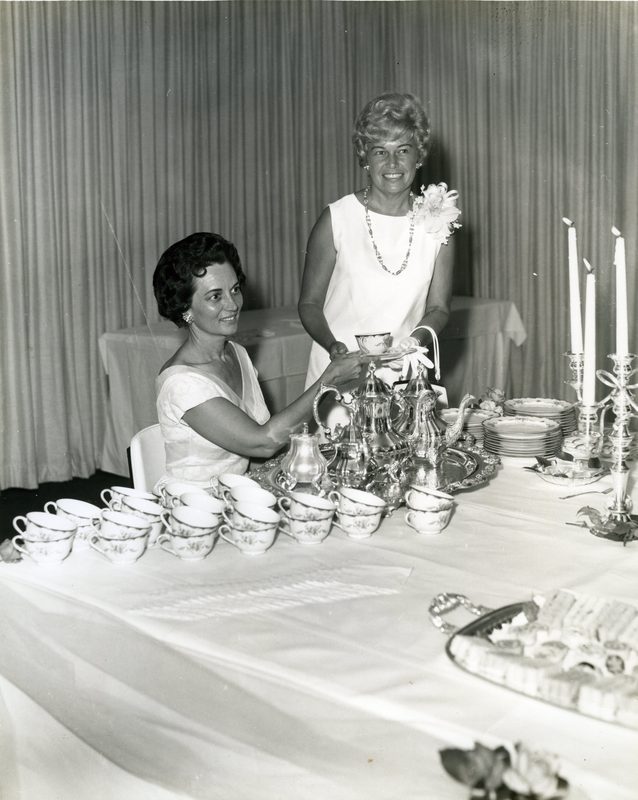
Ruth Josephine (Blackburn) Burns — “Ruth” to her generation, “Mamu” to her grandchildren — appears throughout this archive as Bob’s wife: the Army nurse he met at Lilford Hall, the bride at Greenwich, the woman who flew to the continent on his lap in a P-47. But she was rarely heard from directly. These letters change that.
In the family email circle of 2003–2005, Ruth wrote her own letters — signed “Mom/Mamu,” addressed to “all you Burns and Burnsettes” and “Dear Souls.” They begin while Bob was still living, with her watching over him, and carry on through her widowhood. They are warm, funny, unguarded, and entirely hers — a woman in her eighties with a failing memory and an undimmed wit, reaching out across the wire to the people she loved.
this is Mamu trying to reach out and get a bit of her news off to you all..
— Ruth Burns, August 20, 2004
The earliest letters, 2003 — Bob’s last year. She sees what the rest of the family, at a distance, could not.
By the summer of 2003 Bob was writing his daily Morning Reports, telling the family his life story. Ruth was beside him — and her letters carry what his did not: her quiet worry.
I do feel anxious, just a mite, for your Dad.. He has no complaints but is so subdued--you know--dozes a lot and not much conversation. Maybe he just need someone to converse with--who is interesting
— Ruth Burns, letter of June 30, 2003
By October he was tethered to oxygen, and she watched him bear it without complaint.
I guess the lung parafinalia is a chore to drag around--he never complains about it . I guess one wouldn't complain about equipment that keeps one alive
— Ruth Burns, letter of October 13, 2003
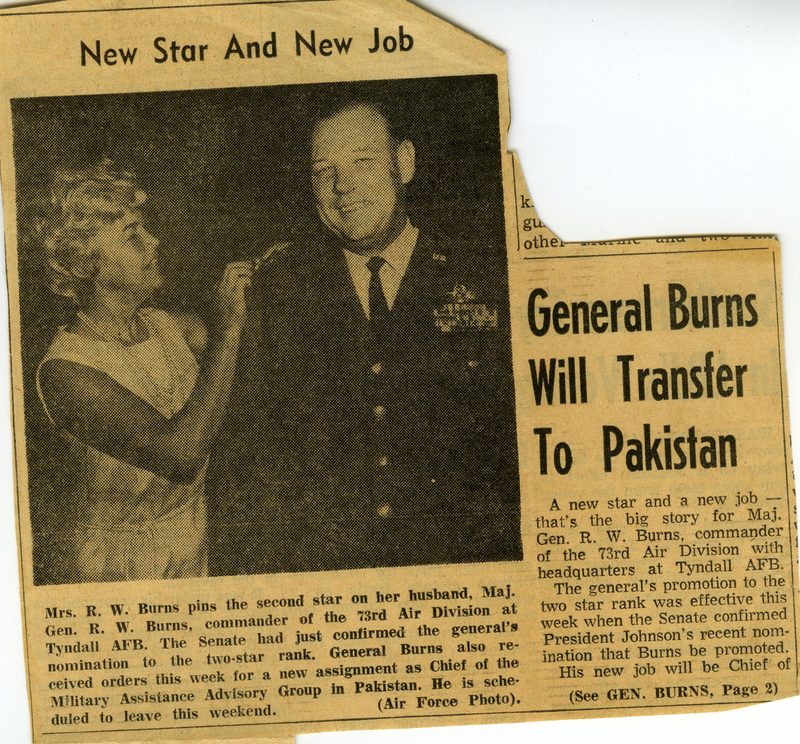
Her own life surfaces in fragments — the postings, the childhood, the long marriage.
Andy would send her lists of subjects to “enlarge on,” hoping for a fat letter every few days; she answered with whatever the old album could jog loose. Of their years in Greece, where Bob served with the military advisory group, she remembered the household:
Sula was our 'head' maid--a plump hearty soul who loved the kids.. Goodnatured--laughed alot
— Ruth Burns, letter of October 13, 2003
Other memories came through the senses — a packet of scrapple fried up in her room carried her back eight decades to a Pennsylvania girlhood:
I just fried up a packet of SCRAPPLE and it is as good as what I ate at home 80 years ago..
— Ruth Burns, letter of November 4, 2004
And the nurse never quite left her. Counseling a young mother-to-be in the family, she reached back to a night spent soothing her infant niece:
I would put the crying Janie tummy down on my chest-belly and pat a bit and soon she would go to sleep
— Ruth Burns, letter of May 10, 2004
And one story she always told best on herself. As newlyweds out of Mitchel Field, she and Bob met his old wartime roommate — the playwright Thornton Wilder — in the lobby of the Algonquin Hotel. Ruth, the nursing graduate from Johnstown, Pennsylvania, ducked back upstairs for something; as she hurried for the elevator, Wilder called after her to ask what kind of cocktail she would like. Caught off guard before the great man, and reaching for the only “cocktail” that came to mind, she answered:
Shrimp?
— Ruth Burns, in the lobby of the Algonquin, as her children love to tell it
It became one of the family’s most cherished stories — to this day her children can summon the whole scene with a single parenthetical word: (Shrimp!).
She had a whole vocabulary of her own, too. One night she opened a letter “Oh poot” and signed off, “Ruth, this is rediculous… Say good night and get into bed. Try again tomorrow!” Her daughter Becky wrote back delighted, cataloguing the rest:
you used several expressions from the old Rowan and Martin laugh-in show, like “Veddy Intedestink” (very interesting) and “you bet your sweet bippy”—isn’t the brain the funnest companion a person ever had!
— Becky to Ruth, the “Mamu speak” letters, March 2005
And she knew exactly where the clipped, telegraphic tone of her own letters came from — and said so:
[My writing] style tends to come [from] my nurse days.. Just the facts—please—what is the patient’s condition (eating, tpr, sleeping, fever, where pain is, etc.)
— Ruth Burns, on her own voice
After February 2004 — her widowhood, in her own words.
Bob died on February 6, 2004. Ruth kept writing for another two years, from Andy’s home in Texas and then from a residence in Florida. She missed him plainly, and said so:
I won't tell Dear Bob when I talk to him in my prayers.. Oh how I do miss him
— Ruth Burns, letter of November 4, 2004
She was clear-eyed about her own decline and met it with a reader’s mind and a wry tongue — aware, always, of who she had been:
most seem to know I am a generals wife and aren't too forward
— Ruth Burns, letter of August 11, 2005
I do know that with- drawing from the world(socializing) is not healthy
— Ruth Burns, letter of August 11, 2005
And she could still laugh at herself — at the brain “winding down,” at the cards she could no longer follow, at her own good health outlasting her memory:
when your brain starts winding down and you feel baffled at what you are trying to do--be kind to your friends and just say 'Oh gee, I have a doctor's appointment', can't make it this time
— Ruth Burns, letter of August 20, 2004
My health is like my Mom's-- too good. I'll last well into my eighties
— Ruth Burns, letter of August 1, 2005
Ruth Burns died on February 12, 2006, two years and six days after Bob. Her headstone at Sarasota National Cemetery, beside his, reads “ISN’T THIS AN ADVENTURE.” It is the perfect answer to his own: “Let’s try it.”
The hundred letters she left behind are not a memoir. They are better than that — the unstudied daily voice of a woman who had nursed the wounded in wartime England, raised a family across three continents as a general’s wife, and faced her last years with books, puzzles, an evening martini, and an open heart. She closed nearly every one the same way.
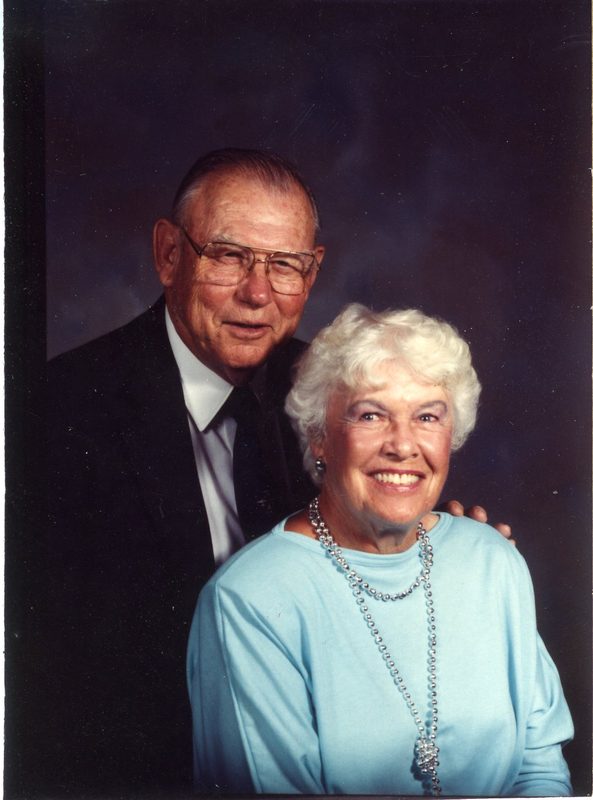
Love to all you Burns Clan — Mamu
Ruth’s letters survive in the family email archive preserved by her son Andy Burns (2002–2007). She composed them in her own voice, typed at the keyboard or dictated to Bob; all passages here are quoted verbatim and lightly curated for this remembrance — her words, her spelling, her dashes. The one exception is the Algonquin “cocktail” story, which the family preserved in its remembrance of Bob’s friendship with Thornton Wilder rather than in her letters. Related: Meeting Ruth · Bob’s Morning Reports · Photographs.