In His Own Words
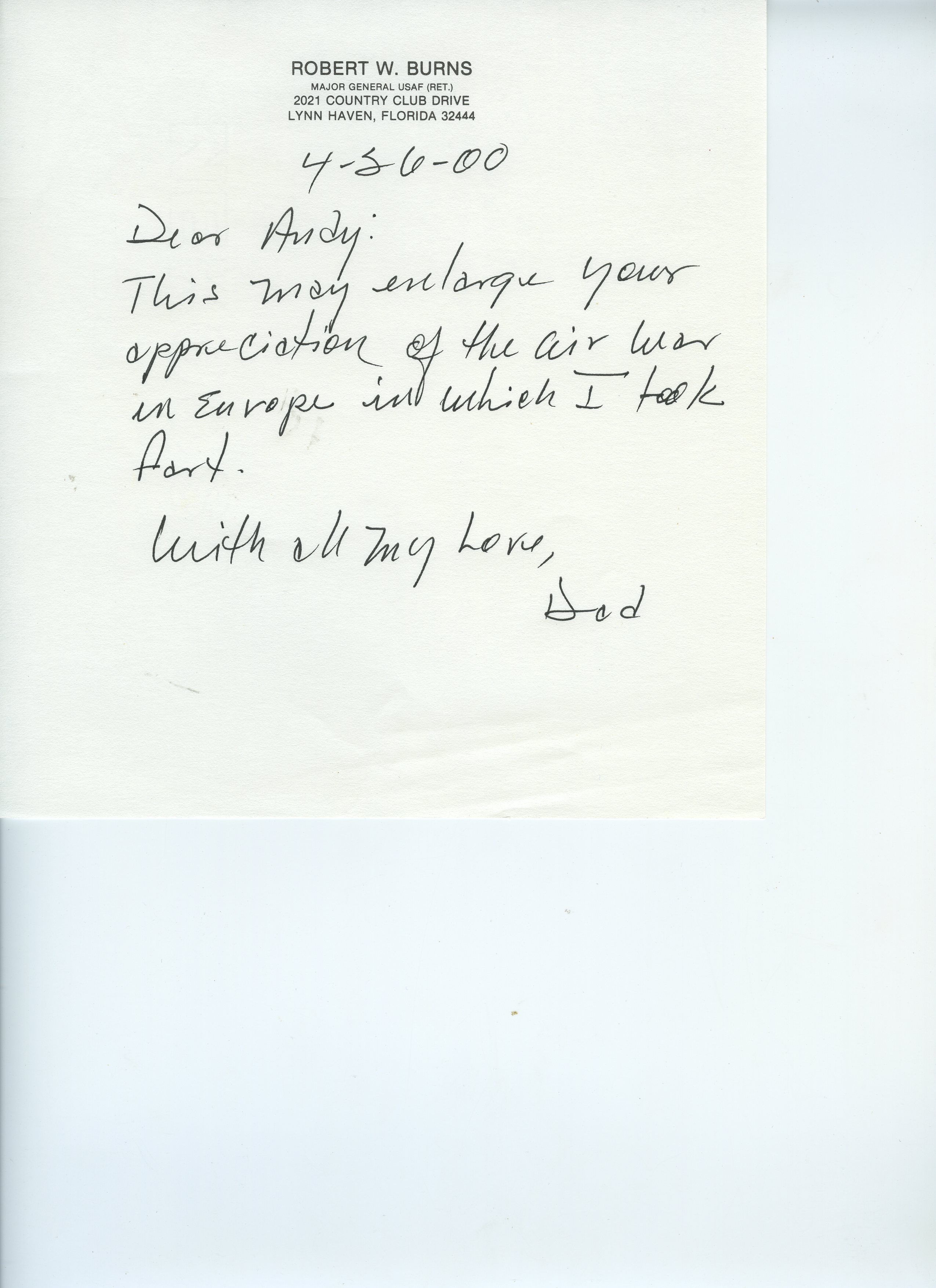
Bob was always willing to talk about the war and his experiences — he was genuinely grateful to have survived, keenly aware of his good fortune, and proud of what his generation had accomplished. What makes the ending of this essay notable is precisely that it is out of character. He was not typically given to expressions of personal disappointment. The frustration over the C-54 ride home was real and lasting, and it surfaced more often as he got older, but it stood out against a general disposition of gratitude and engagement. That it was still unresolved fifty-four years later, and that he chose to put it on paper for a Mississippi veterans collection, says something about how deeply it had lodged.
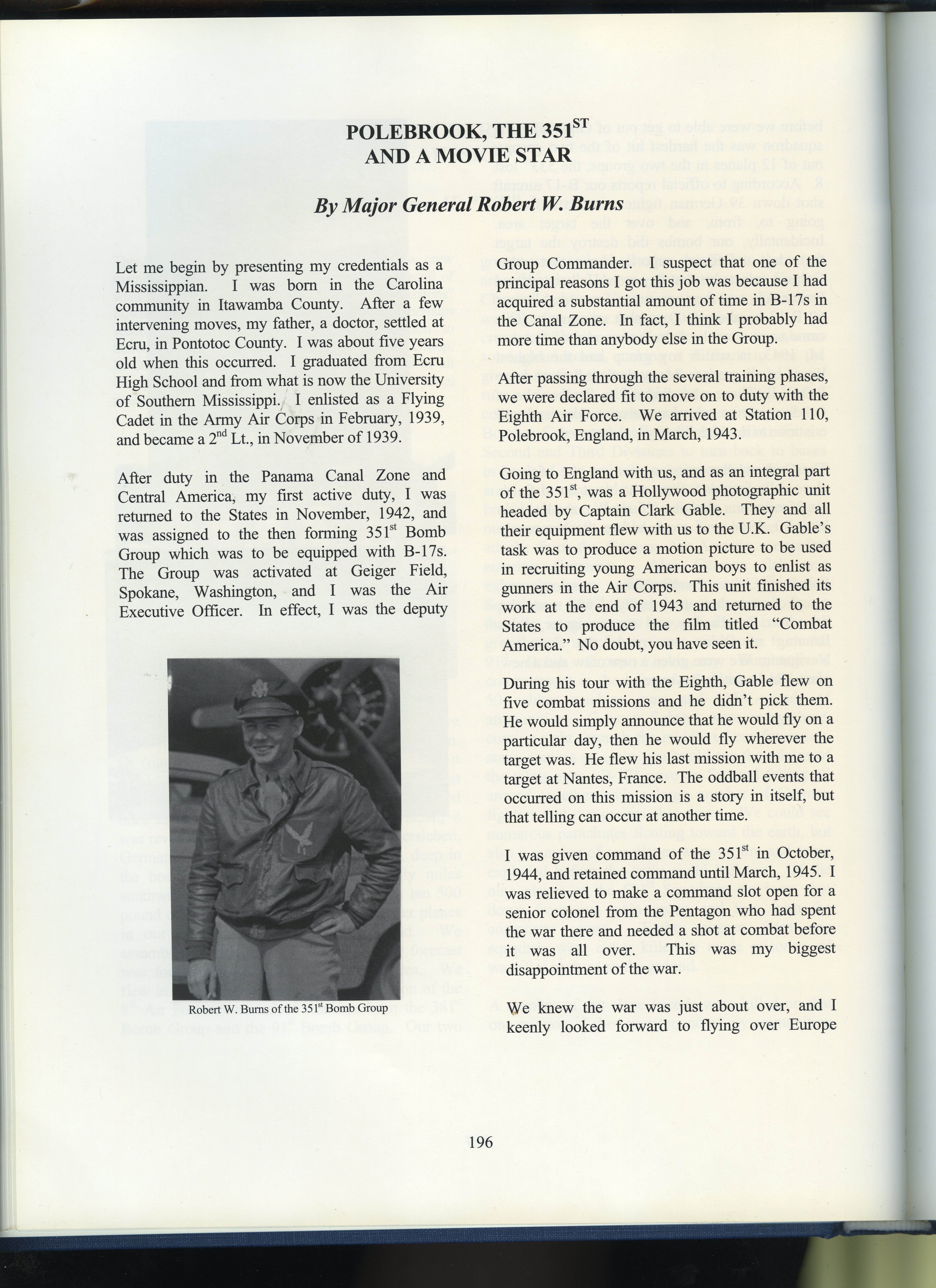
Let me begin by presenting my credentials as a Mississippian. I was born in the Carolina community in Itawamba County. After a few intervening moves, my father, a doctor, settled at Ecru, in Pontotoc County. I was about five years old when this occurred. I graduated from Ecru High School and from what is now the University of Southern Mississippi. I enlisted as a Flying Cadet in the Army Air Corps in February, 1939, and became a 2nd Lt., in November of 1939.
After duty in the Panama Canal Zone and Central America, my first active duty, I was returned to the States in November, 1942, and was assigned to the then forming 351st Bomb Group which was to be equipped with B-17s. The Group was activated at Geiger Field, Spokane, Washington, and I was the Air Executive Officer. In effect, I was the deputy Group Commander. I suspect that one of the principal reasons I got this job was because I had acquired a substantial amount of time in B-17s in the Canal Zone. In fact, I think I probably had more time than anybody else in the Group.
After passing through the several training phases, we were declared fit to move on to duty with the Eighth Air Force. We arrived at Station 110, Polebrook, England, in March, 1943.
Clark Gable
Going to England with us, and as an integral part of the 351st, was a Hollywood photographic unit headed by Captain Clark Gable. They and all their equipment flew with us to the U.K. Gable's task was to produce a motion picture to be used in recruiting young American boys to enlist as gunners in the Air Corps. This unit finished its work at the end of 1943 and returned to the States to produce the film titled "Combat America." No doubt, you have seen it.
During his tour with the Eighth, Gable flew on five combat missions and he didn't pick them. He would simply announce that he would fly on a particular day, then he would fly wherever the target was. He flew his last mission with me to a target at Nantes, France. The oddball events that occurred on this mission is a story in itself, but that telling can occur at another time.
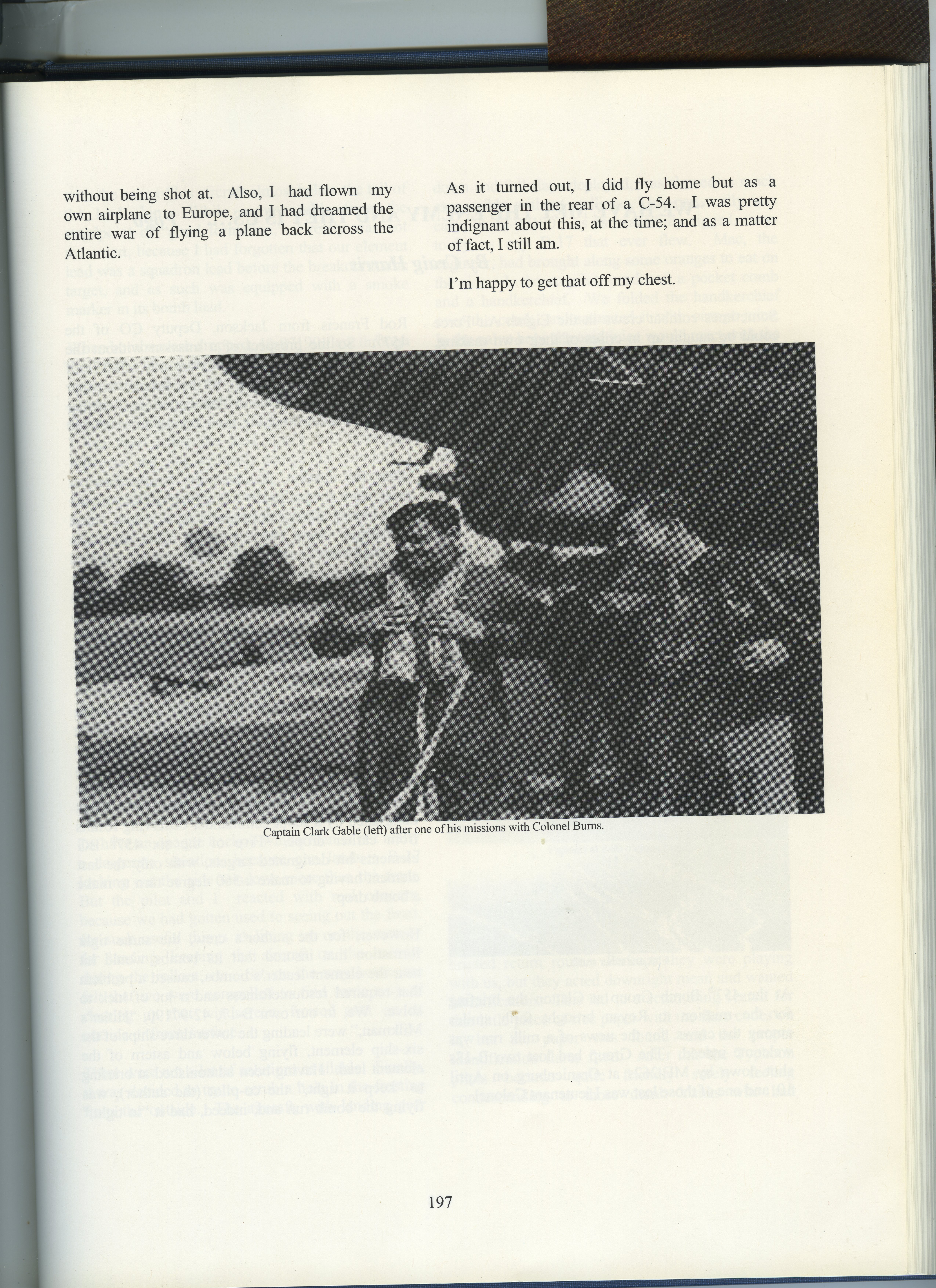
Gable had joined the AAF in August 1942 following the death of his wife, actress Carole Lombard, in a plane crash. He was 41, too old for combat by regulation, but pulled strings to get himself assigned. At Polebrook he flew as a gunner observer, documenting the air war for the recruitment film. The five missions he flew were real combat missions — he was not acting. After the war, Hitler reportedly had standing orders to capture Gable alive and bring him to Berlin.
The Biggest Disappointment of the War
I was given command of the 351st in October, 1944, and retained command until March, 1945. I was relieved to make a command slot open for a senior colonel from the Pentagon who had spent the war there and needed a shot at combat before it was all over. This was my biggest disappointment of the war.
By March 1945, the war in Europe was clearly nearly over. Germany was collapsing on both fronts. For a man who had built the 351st from activation through the worst years of the strategic bombing campaign, who had led it through hundreds of combat missions, who had kept his pilots alive and on target — to be removed in the final weeks to give a desk officer a combat credit was a particular kind of institutional injustice. Bob never forgot it.
We knew the war was just about over, and I keenly looked forward to flying over Europe without being shot at. Also, I had flown my own airplane to Europe, and I had dreamed the entire war of flying a plane back across the Atlantic.
As it turned out, I did fly home but as a passenger in the rear of a C-54. I was pretty indignant about this, at the time; and as a matter of fact, I still am.
I'm happy to get that off my chest.
The essay was written in 1999. Fifty-four years after the fact, Bob was still indignant. He had flown his B-17 across the Atlantic in 1943. He had every right, in his view, to fly it — or something — back. Instead, a relieved group commander rode home as cargo in the back of a transport. The man who had been flying since 1939, who had accumulated more B-17 time than almost anyone, who had commanded a bomb group in combat, sat in a passenger seat and watched someone else work the throttles across the ocean he had earned.
From the Flight Records
From the recordsBob's last two flights from Polebrook, on March 27 and 29, 1945, are both logged as passenger time — the relieved group commander riding in the back. Then a complete absence of entries through April and May: the transatlantic C-54 ride home, unlogged because he was truly a cabin passenger, not on the flight deck. When his records pick up again in June 1945, he is at Peterson Field, Colorado — and immediately in the left seat, flying TB-17Fs as first pilot. The gap is the crossing. The indignation is in the silence.
The Source